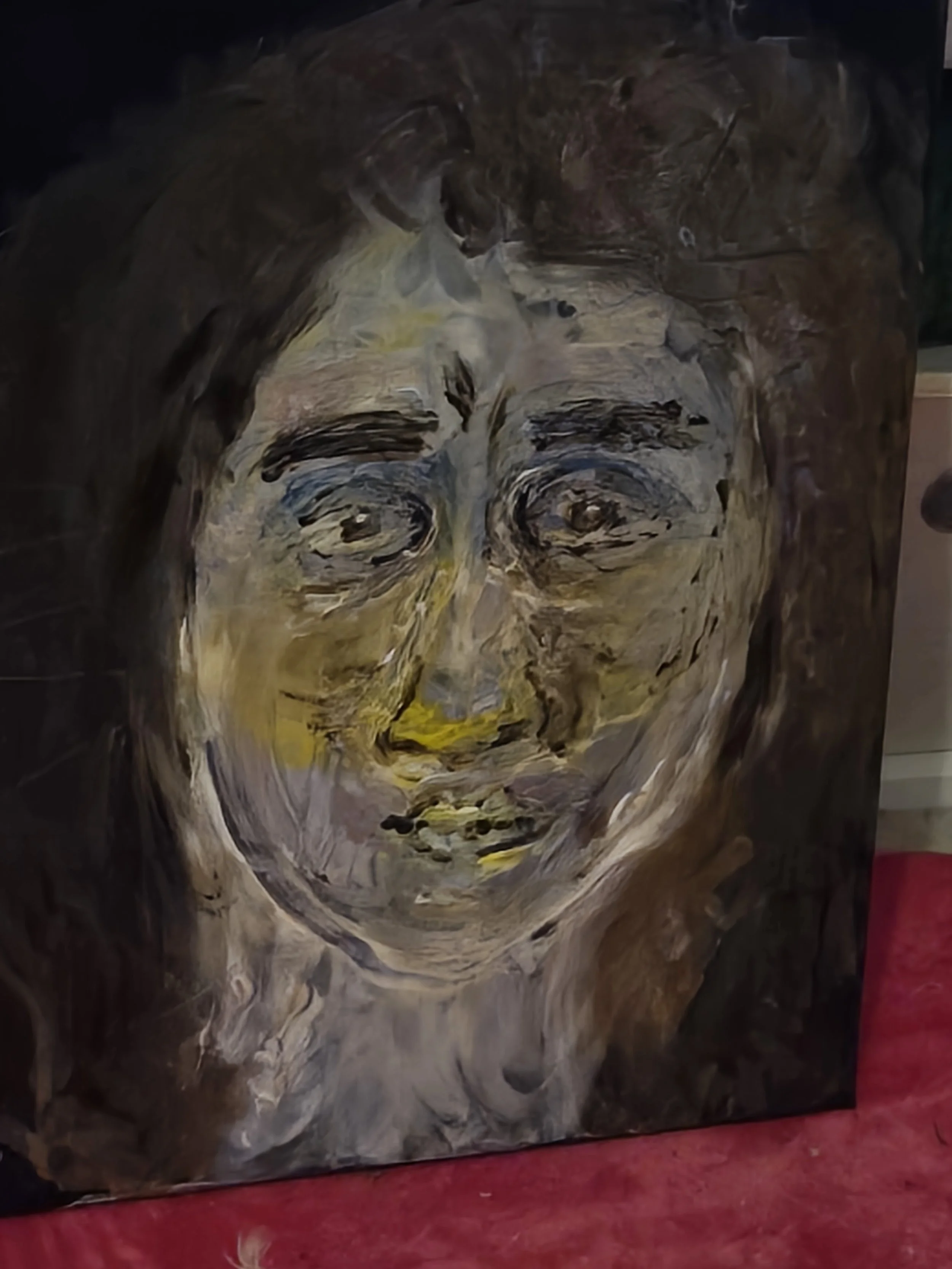
Trance Art: Blending with Spirit and Allowing Spirit to Lead
Trance art is a fascinating and deeply personal journey. It is an exploration of the connection between ourselves and the spirit world, where the artist gradually develops the ability to enter a deeper trance state and become passive enough to allow spirit to work through their hands.
Unlike traditional art, where we consciously decide what we want to create, trance art involves learning to step aside from our own conscious involvement. The intention is to become sufficiently passive that spirit can take control of the artistic movement, allowing the hand to move and create without our usual conscious direction.
This is not something that generally happens overnight. It takes dedication, practice, patience and, above all, the development of a deeper blending with spirit.
What does it mean to blend with spirit?
Blending is an essential part of trance art development.
It is about developing such a close connection with spirit that we can gradually withdraw our own conscious involvement and allow spirit to take the lead.
When we first begin drawing or painting, we are naturally in control. We decide where the pencil moves, how much pressure to apply and what we want to create.
However, in trance art, the aim is very different.
We work towards a state where our conscious mind becomes increasingly passive. Rather than directing the hand ourselves, we learn to move out of the way and allow spirit to use our hands as a means of artistic expression.
This is what makes trance art such a different experience from ordinary inspired or intuitive art.
The importance of becoming passive
One of the most important aspects of developing trance art is learning to become passive.
To allow spirit to work through the hands, the artist needs to reach a state where their own conscious thoughts, intentions and desire to control the artwork have receded.
This can be challenging because we are so accustomed to being in control of our movements.
When we draw normally, we are constantly making decisions, even without realising it. We guide the pencil, correct mistakes and consciously determine what happens next.
In trance, the intention is to move away from this.
The artist works towards becoming sufficiently withdrawn from the physical act of creating that spirit can take the lead. The hands become the instrument through which the artwork is produced.
It is not about deliberately moving the hand and imagining that spirit is guiding it. It is about developing the depth of trance and passivity necessary for the artist to relinquish conscious direction.
The stages of developing trance art
1. Developing your spiritual connection
The first part of the journey is developing a relationship with spirit. Regular sitting in the power, meditation and spiritual development can help establish the foundations needed for deeper trance work.
2. Learning to quieten the conscious mind
We need to learn to move away from our everyday thinking. This involves developing the ability to become deeply relaxed and less attached to our surroundings, thoughts and physical actions.
3. Developing deeper blending
As development continues, we work towards a closer blending with spirit. This is not simply about feeling connected; it is about allowing our own conscious presence to recede so that spirit can take a greater role in the experience.
4. Reaching a passive trance state
This is a particularly important stage. The artist works towards becoming passive enough that they are no longer consciously directing the artwork.
The intention is for spirit to use the hands, allowing movements and artistic expression to take place without the artist deliberately controlling them.
5. Allowing spirit to create
As the depth of trance develops, the artist may experience the hands moving in ways that are not consciously planned or directed.
The artwork is allowed to unfold rather than being consciously constructed by the artist.
This is the experience that many people working towards trance art hope to develop.
How long does it take?
There is no fixed timescale for developing trance art.
For some, the initial stages of blending and passivity may develop relatively quickly. For others, reaching a sufficiently deep trance state can take months or years of regular practice.
It is important to understand that simply being able to relax or produce spontaneous movements does not necessarily mean that someone has reached a deep trance state.
The development is about gradually learning to withdraw conscious control and become passive enough for the experience of spirit working through the hands to take place.
There is no need to rush this process. Trying to force trance or expecting immediate results can actually make development more difficult.
Patience, consistency and regular spiritual practice are far more valuable than trying to achieve a particular result within a set period.
Moving out of the way
Perhaps the most important part of trance art is learning to move out of the way.
We spend so much of our lives directing our thoughts and actions that allowing ourselves to become passive can feel quite unfamiliar.
But this is the essence of the practice.
The artist is not trying to create a picture, decide what should happen or guide every movement. Instead, they are working towards a state of trance where their conscious involvement recedes and spirit is given the opportunity to work through their hands.
It is a gradual process of trust, blending and surrender.
And while every person's development will be different, the journey itself is an important part of learning to work in this way.
Trance art is not about learning to draw differently. It is about learning to become passive enough to allow spirit to take the lead.
